Rollbit Hot Wallet Drops $20m in 24 Hours
Rollbit's whole brand is verifiable on-chain transparency, and now the chain is verifying $20m out the door.
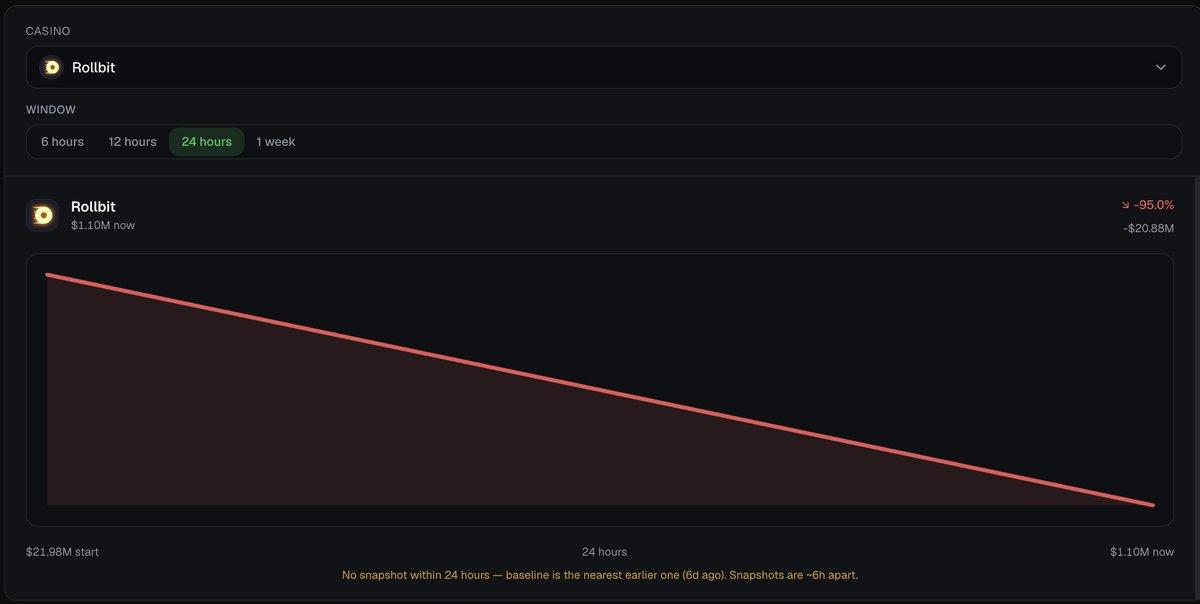
On Thursday, the iGaming intel account Circus checked Rollbit's hot wallet and did the one thing Rollbit has spent years inviting people to do: read the chain out loud. Twenty million dollars had left the wallet inside a single day. What remained was $1.1 million, a 95% drop, and exactly the kind of number a transparency-branded casino would rather not have broadcast at 7:33 a.m. UTC.

To be clear, this is a flag, not a verdict. A hot wallet is the operating account a casino uses for everyday deposits and withdrawals, and a 95% drop can mean the house swept its chips into cold storage, which is routine, or that a lot of players are heading for the exits at once, which is a different genre of movie. The chain does not label which one it is. It just sits there looking loud.
The Chain, Read Back to the House
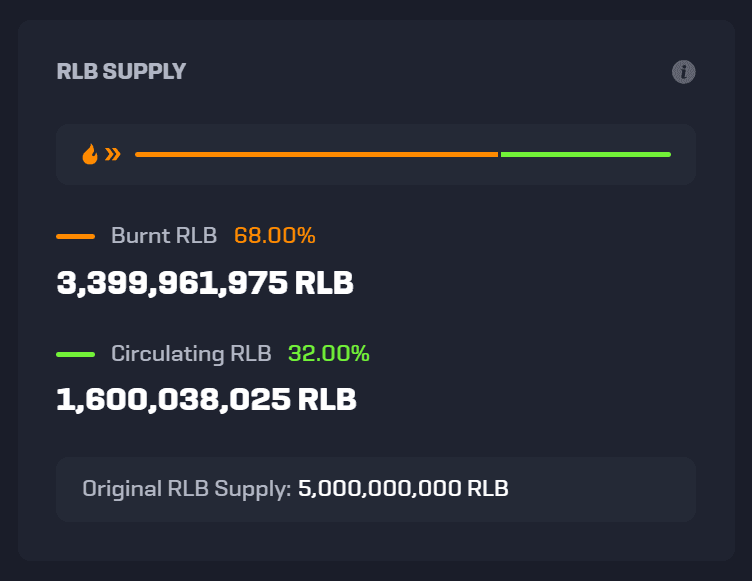
The comedy is that Rollbit's entire brand is the thing that just ratted it out. This is the casino that has spent years pointing at an etherscan address and calling it radical transparency: its RLB token supply, methodically burned with casino revenue, is down 68% from an original five billion. We covered the burn as it closed in on 3.4 billion, including the part where the burn address is more responsive to scrutiny than the support desk. On Thursday, the same on-chain visibility that powers the marketing pointed back at the house, and suddenly everyone remembered how to read a blockchain.
The Replies Split, Mostly by Era
Under Circus's post, the audience divided cleanly along the fault line Rollbit has spent two years widening. One reply, from an account called D, skipped the wallet numbers entirely and went straight to the founding myth of the anti-KYC complaint:
Rollbit is a scam since Zee left they fucking pple over with kyc bs bla bla, but when he was streaming there, we can deposit with no problem
Read that last clause twice. The golden age D is mourning is the one where you could deposit "with no problem" because nobody was asking who you were. The identity checks the industry calls KYC arrived, and with them came the complaint that everything was better when there was less of everything. D later added the crucial historical detail: "i took out money in the beginning." Paradise lost, in this telling, is a period when deposits went in, withdrawals came out, and no document ever changed hands. For a certain kind of player, that is what "not a scam" means.
Then the counterweight arrived, from an account called OPTIC whose bio reads "Casino staff, Gambling and Peptide enthusiast," a combination of credentials that makes OPTIC either the most or least qualified voice in the thread. OPTIC replied:
If you can't kyc then do not gamble, simple as that. Sorry the world isn't built for fraudsters
A casino staffer telling a KYC skeptic not to gamble is, strictly speaking, the most honest line in the entire thread. It is also the rare exchange in which a casino employee and a player agree on the facts and disagree only on whether those facts are a scandal. D sees KYC as the scam. OPTIC sees KYC as the cover charge to a world not built for fraudsters. Somewhere between those two positions is a wallet that lost 95% of its balance, which neither of them mentioned.
Thirteen Ways to Deposit
Which brings us back to the flag, and why it stays one. A 95% hot-wallet drop is only alarming until someone says "cold storage," and nobody at Rollbit has. The account was online all day, mind you: it announced that using the casino just got easier across 13 of the most popular networks, and it told a player who hit a 3,200x base hit simply "Noice." Routine rebalance or slow-motion run, the marketing engine kept its schedule. The chain, which Rollbit taught its customers to trust more than its own word, is still sitting there with the number. It just is not telling anyone what the number means.
Comments
Loading comments…