Stake Seed Change Reveals the 751-Spin Max Win That Got Away
The seed-change feature, marketed as player empowerment, just showed a streamer they made the worst possible decision at the worst possible moment.
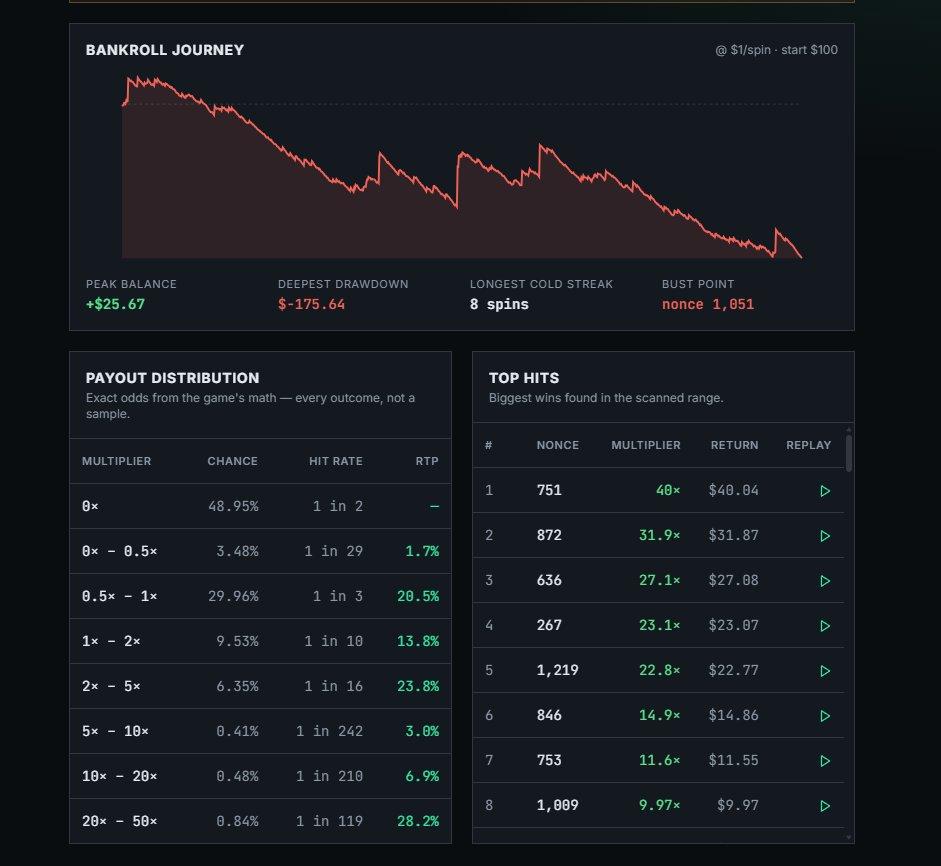
Anthospins, a Stake streamer with 2,116 followers, did what every frustrated gambler has done at least once. Down $3,000 after 259 spins on a Valkyrie slot, Anthospins changed the seed. Then Stake's transparency tools showed exactly what had just been walked away from: 751 more FU spins to hit the max win at 2,000x the bet. Anthospins is not angry. Anthospins is grateful. This might be the most honest endorsement Stake has ever received.
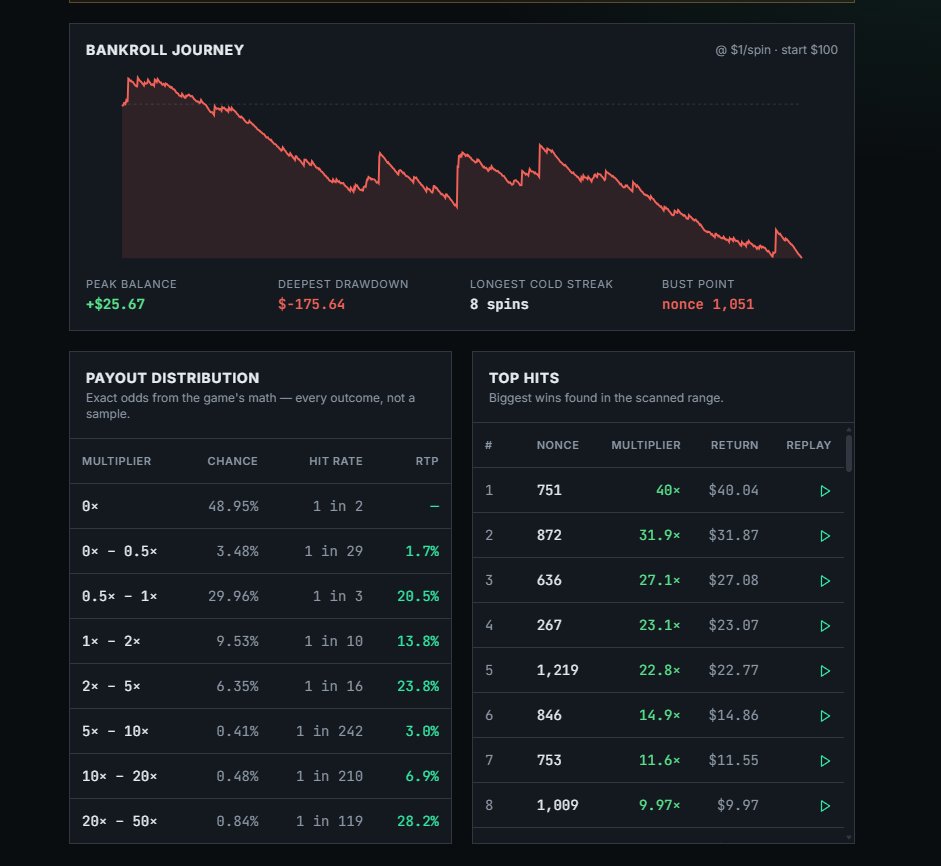
The seed-change feature, which Stake rolled out last month under the banner of "Better, Fairer and more Transparent," does exactly what it says. It lets players verify whether changing a seed was a good decision by showing what the previous seed would have produced going forward. It is a time machine that only travels to futures that can no longer happen, and it runs on regret.
Anthospins ran the numbers and the dashboard delivered its verdict with the clinical precision of a doctor who has seen your chart and is legally required to tell you the truth. Seven hundred and fifty-one FU spins. At 2,000x the bet per spin. Already $3,000 in the hole after 259 spins, the math was brutal before the tool weighed in. The tool just confirmed that brutal was only the appetizer. Anthospins thanked Stake and CEO Eddie Craven by name.
This is the part that breaks your brain if you think about it too long. The feature is marketed as player empowerment, and in a narrow sense it delivers. You can see whether you made the right call. But what it actually shows you, more often than not, is that you made the worst possible decision at the worst possible moment, with mathematical certainty, and there is nothing you can do about it except tweet through it. Anthospins did. "This game absolutely fucked me," the post continued, tagging Valkyrie Studio, the indie slot maker whose RTP swings have been making headlines all week.
The other exit
While Anthospins was processing this data-driven heartbreak, another Stake player was processing something else entirely. @bigstonespinner, five followers and seventy-nine tweets, logged on to announce an end to depositing. "Feels like the only people on Stake are paid paid actors and streamers," the post read, before a parting "fuck you stake" accompanied by a middle-finger emoji. The plan is to collect the remaining bonuses and never look back. No data. No seed analysis. Just vibes and a grudge.
The contrast is almost too neat to be real. One player used Stake's transparency tools, discovered the cold mathematical truth about bad timing, and came away appreciative. The other player looked at a balance, concluded the whole operation is a conspiracy of paid actors, and stormed off. Same platform. Same general complaint about outcomes. Radically different exits.
The mirror Stake built
There is a genuine insight buried in this juxtaposition, and it is not the one either player intended. Stake's seed-change verification tool is, functionally, a mirror. It reflects what actually happened in the math, stripped of narrative, stripped of vibes, stripped of the desperate hope that the next spin is the one. For some players, that reflection is clarifying. For others, it is unbearable. The tool does not care which one you are.
What the tool does not do, of course, is answer the question both players are actually asking. Anthospins thanked Stake for the transparency but still ended the post furious at the game. @bigstonespinner's complaint, beneath the profanity, is the same complaint every losing player has ever made: this does not feel fair. The seed-change tool can tell you what would have happened. It cannot tell you why it happened that way. It cannot tell you whether the RTP is rigged, whether the originals are tuned against you, or whether your account state matters. It can only show you the math of the road you did not take.
Stake has spent the past month promoting transparency while sidestepping harder questions about seed selection, frozen withdrawals, and missing bonuses. The seed-change tool is a genuinely useful feature. It is also a convenient one, because it shifts the burden of proof onto the player. Here is the data. Here is what the old seed would have done. If you changed it too soon, that is on you. If you kept it and still lost, well, you saw the math. The house always wins twice: once at the slots, and once in the framing.
Anthospins is still streaming. @bigstonespinner is collecting the remaining bonuses. The seed-change tool sits there, waiting to tell the next player exactly how badly they timed their exit. Stake will not tell you whether the game is fair. But it will show you, in excruciating detail, exactly what you gave up. For some players, that is transparency. For others, it is salt in a wound that was never going to heal.
Comments
Loading comments…