Rolly Adds MetaMask Agent Wallets
The casino that can prove it has nothing to hide just added MetaMask agent wallets. Whether the bankroll is actually there when you withdraw is a different question.
Rolly, the on-chain casino whose bio reads "First casino that can prove it has nothing to hide," announced Thursday morning that users can now deposit and withdraw directly through MetaMask's newly launched Agent Wallet. Alex, Rolly's CEO and a man whose 1,310 followers have watched his platform endure the kind of week that ages a whitepaper in dog years, delivered the news via quote tweet with the restraint one expects from a frontier partner: "Agent wallets are live. 🦊 Frontier partners only."
The underlying announcement came from MetaMask, which declared that Agent Wallet is "now live for everyone." The product is exactly what it sounds like: a wallet designed for AI agents rather than humans, allowing autonomous software to hold and move funds without a person in the loop. For a crypto casino, the proposition is straightforward. Your agent can bankroll your degeneracy while you are asleep, at work, or composing a sternly worded support ticket about the last withdrawal that did not arrive.
Frontier partners only
The phrase "frontier partners only" is doing a lot of work in Alex's post. In crypto marketing, it translates roughly to "this exists, we have it, you probably cannot use it yet, and the exact rollout timeline will arrive when it arrives." Rolly is one of the first casinos to integrate with Agent Wallet, which is a genuine technical achievement for a platform still operating in beta. Whether the infrastructure underneath the slick new deposit layer is ready for the volume it might attract is a question the two-sentence announcement did not address.
The context the press release left out
The integration arrives against a backdrop that Rolly's marketing team would probably prefer stayed in the rearview. Two weeks ago, the platform's top affiliate FlounderKing casually disclosed that the CEO had to personally refill the bankroll after a single player won too much money, because the on-chain treasury was, at that moment, insufficient to cover the withdrawal. Alex replied not with a denial but with a promise that six and seven-figure withdrawal stats were coming with mainnet. The implication was that whatever liquidity issue required an emergency CEO top-up was a beta-phase artifact, not a structural concern.
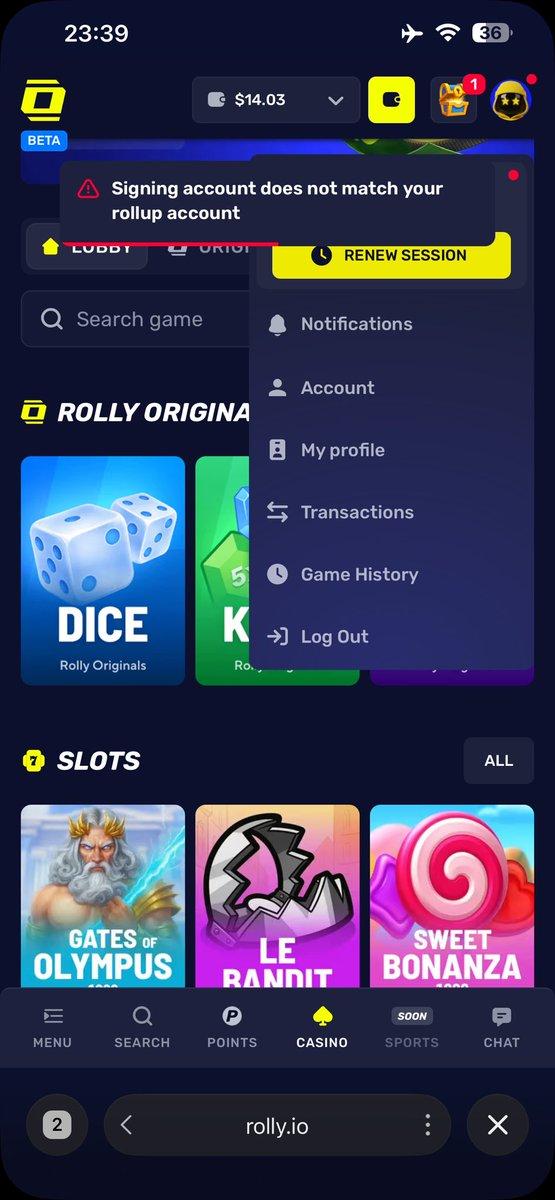
Days later, player MishaShorts found their funds locked behind a bug that Rolly acknowledged had already been patched for new users. The casino's proposed resolution was for the player to abandon the affected account and start fresh with a new one. When MishaShorts declined, Rolly's support posture became what might generously be called a strategic shrug: "There's nothing more we can do until that's done." The platform that can prove it has nothing to hide had proved, in a recorded support exchange, that it had nothing to offer a player whose money its own code had swallowed.
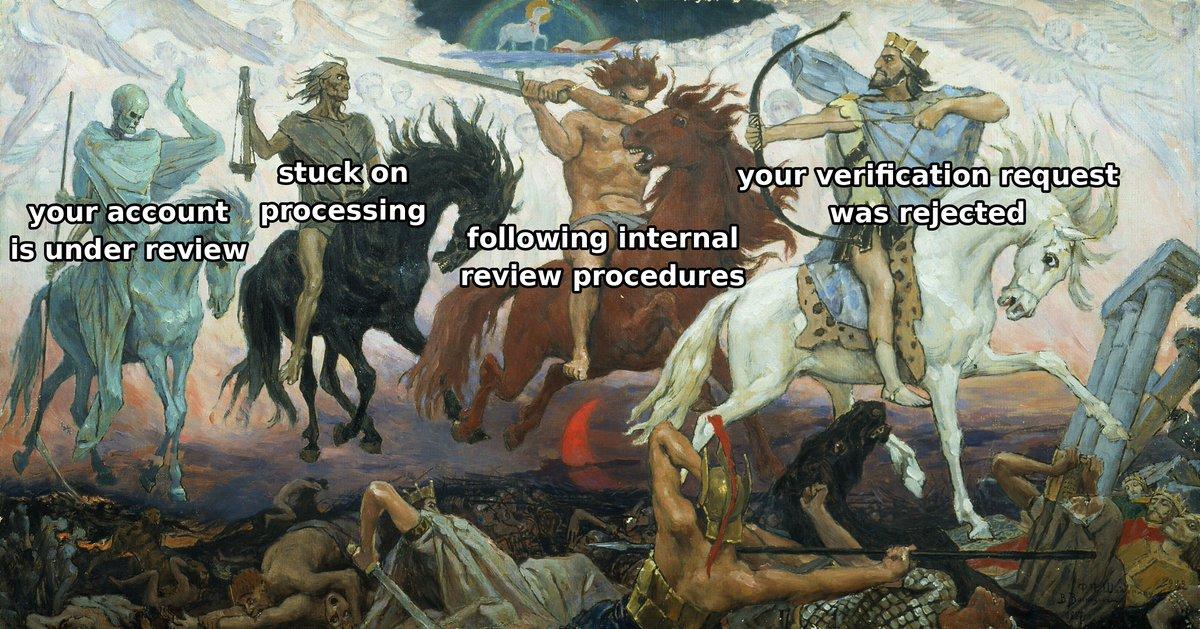
Sandwiched between those two incidents, Rolly itself posted a meme comparing its withdrawal process to the Four Horsemen of the Apocalypse. The company's own staff piled into the replies to confirm the comparison was accurate. ACE, Rolly's marketing pilot, wrote "real shit." The casino's meme intern added "so true." This is not the kind of brand alignment most companies pursue, but Rolly has never been most companies.
The infrastructure question
The MetaMask Agent Wallet integration is, on its own terms, a legitimate step forward for on-chain gambling UX. Letting an agent handle deposits and withdrawals removes friction from a process that, in crypto casinos, is already supposed to be trustless. The architecture is coherent: MetaMask provides the wallet layer, Rolly provides the games, the blockchain provides the settlement, and the player provides the conviction that none of these components will break in sequence.
The tension is not in the agent wallet layer. It is in everything beneath it. An agent can deposit funds instantly because the blockchain confirms the transaction. Getting funds out requires Rolly's infrastructure to hold up its end of the bargain, and across the past two weeks, that infrastructure has demonstrated a talent for dramatic failure at inopportune moments. The agent does not know that the bankroll was refilled by a CEO scrambling to move personal funds. The agent does not know that a beta bug might lock the withdrawal queue behind a session-specific error that has already been fixed for everyone except the person currently trying to cash out. The agent just executes.
Alex's post promised that agent wallets are live for frontier partners. It did not promise that the money will be there when the agent asks for it back. That part, presumably, is still in beta.
Comments
Loading comments…