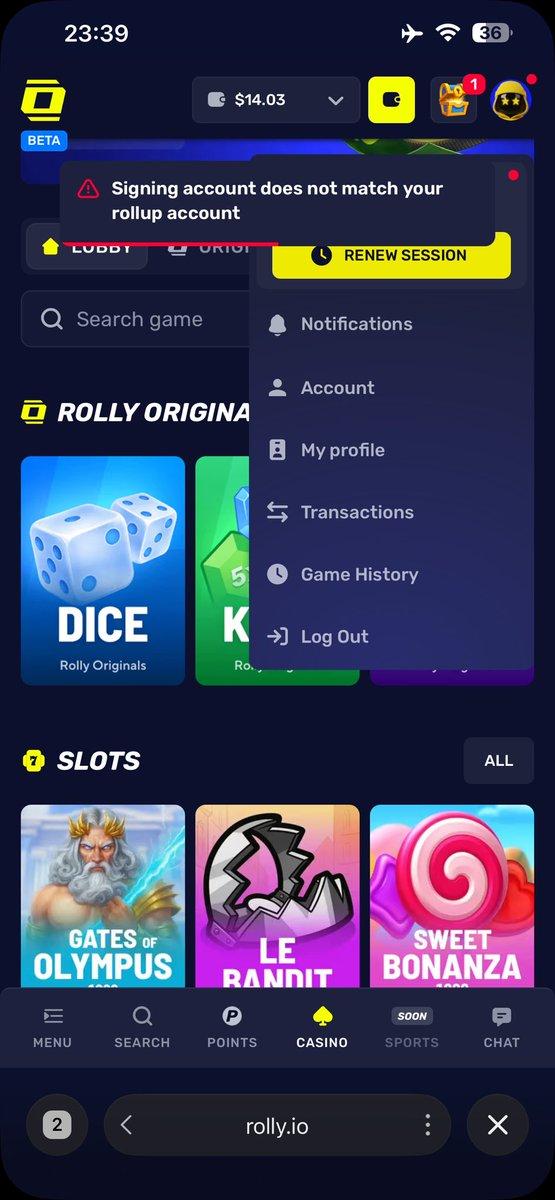
Rolly CEO Refills Bankroll After Affiliate Wins Too Much
The provably fair casino's top affiliate had to wait for the CEO to personally top up the funds. Now mainnet will fix everything.
Rolly, the on-chain casino whose entire brand proposition rests on the phrase "can prove it has nothing to hide," revealed something Monday evening it almost certainly did not intend to: its top affiliate had to stop and wait for the CEO to personally refill the bankroll after winning too much money. The disclosure arrived not in a security audit or a transparency report but in a cheerful endorsement from FlounderKing, the platform's most prominent partner, who apparently saw nothing unusual about any of this.
FlounderKing was quote-posting Rolly's own promotional tweet, which had boasted that the average withdrawal time for $10,000-plus cashouts on Rolly Beta is roughly 30 seconds, and that "non-custodial means your funds stay under your control, so there's nothing to wait on." The affiliate's commentary, in full:
i can confirm i have cashed out 10s of thousands from Rolly with zero issues
other than the time i won too much and Alex had to refill the bankroll 😅😅😅
loving @rolly_onchain so far
The emoji work here deserves a moment of appreciation. Three laughing-crying faces deployed against the admission that a casino marketing itself as provably solvent required an emergency liquidity injection from its own chief executive when a single player ran hot. This is not a bug report. This is a vibes-based brand strategy.
The reply that made everything worse
Alex, Rolly's CEO, replied roughly 45 minutes later. He did not deny the bankroll refill. He did not explain it. He did not clarify whether the on-chain bankroll was, at any point, insufficient to cover outstanding liabilities. Instead, he responded with:
6 and 7 digits withdrawal stats coming soon with Rolly mainnet launch
Get ready
This is, in its way, a remarkable piece of corporate communications. A platform whose marquee affiliate just casually disclosed that he had to pause his withdrawal while the CEO topped up the treasury is now promising to process six and seven-figure cashouts under the same architecture. The logic appears to be that if the bankroll can be refilled once, it can be refilled again, just faster, and with larger numbers attached.
The transparency paradox
Rolly has spent its entire existence arguing that on-chain architecture eliminates the trust problem at the heart of online gambling. Every spin is verifiable. Every outcome is provable. The bankroll is public. The casino, in its own formulation, has nothing to hide.
What Monday evening demonstrated is that a public bankroll is not the same thing as an adequate bankroll. The ledger might have shown exactly how much money was available, and the answer, in at least one documented case, was not enough. A player won. The CEO had to move funds. The transaction settled after the CEO personally intervened.
This is either the most honest thing in crypto gambling or the most alarming. The bankroll was transparently insufficient, so the CEO made it sufficient. The alternative reading, the one Rolly's marketing presumably hopes nobody will arrive at, is that the platform's "provably fair" architecture meant a player's withdrawal was functionally gated behind a single individual's availability to move money. Both readings are true at the same time, and Rolly's response to the situation was not to clarify which interpretation is correct but to promise that mainnet will deliver larger withdrawal numbers.
A pattern, not an incident
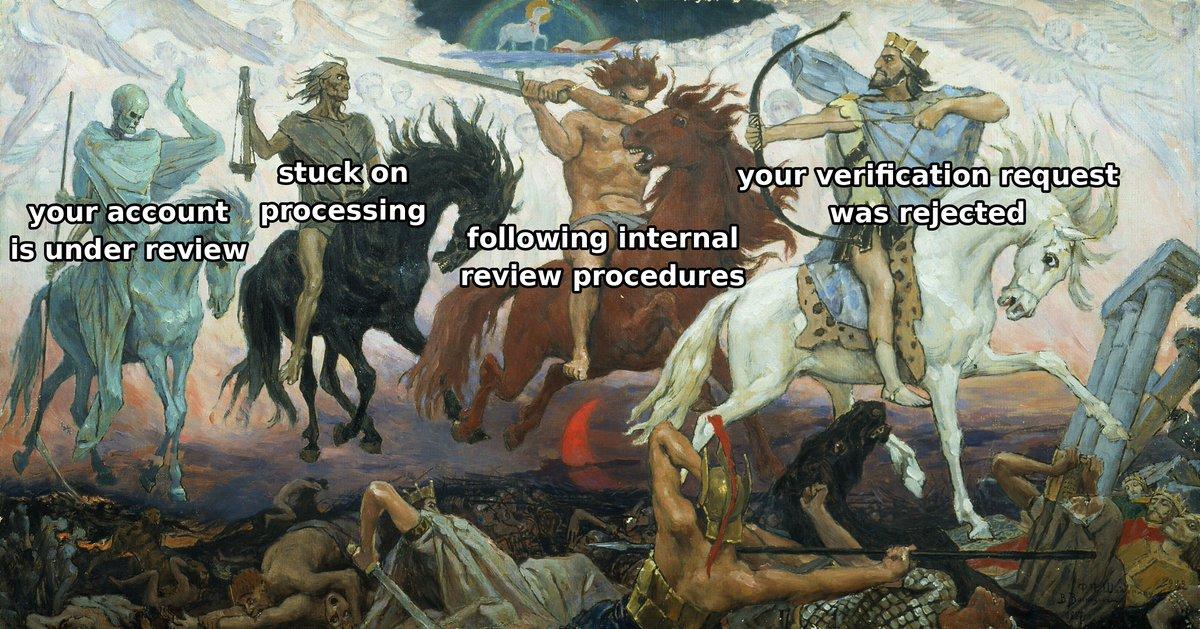
Monday's exchange did not occur in a vacuum. Rolly itself posted a meme just days ago comparing its withdrawal process to "The Four Horsemen," with its own staff piling into the replies to confirm the comparison was accurate. The casino that has nothing to hide has now, twice in one week, publicly acknowledged that getting money off the platform involves obstacles that its own team finds worthy of biblical metaphor.
The bankroll refill adds a new dimension. The Four Horsemen meme suggested the withdrawal process was an ordeal. FlounderKing's testimonial suggests the ordeal has a specific shape: the house might not have your money when you want it, but Alex will get around to it.
What mainnet is supposed to solve
The promise embedded in Alex's reply is that Rolly mainnet will render these incidents obsolete. Six and seven-figure withdrawal stats are coming. The implication is that whatever infrastructure limitation caused the bankroll to require manual topping-up during the beta period will be addressed by the full launch.
Whether this is a technical claim or a vibes claim is not yet clear. Rolly has not published a mainnet timeline, a technical migration plan, or any documentation explaining how the mainnet architecture differs from the beta architecture in ways that would prevent the precise scenario FlounderKing described. What the platform has published is a CEO reply containing the words "Get ready," which is not, strictly speaking, a roadmap.
The industry will be watching. A casino that built its brand on proving it has nothing to hide just revealed, through its own affiliate's testimonial and its own CEO's non-denial, that its bankroll once needed a personal top-up to honor a win. The question mainnet needs to answer is not whether six-figure withdrawals are technically possible. The question is whether the money will actually be there when someone asks for it, without requiring the CEO to check his wallet first.
Comments
Loading comments…